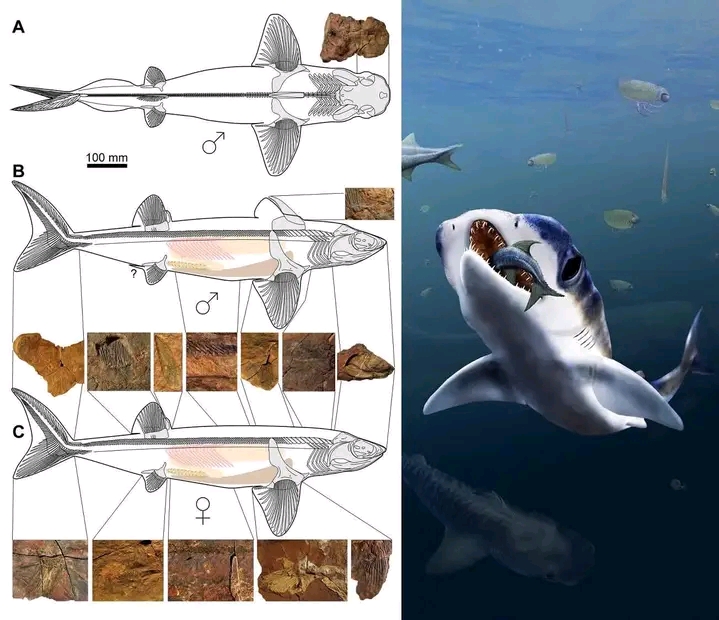
قبل أكثر من 360 مليون سنة، خلال العصر الديفوني المتأخر (Late Devonian)، عاشت في البحار التي تغطي منطقة المغرب حاليًا سمكة غضروفية أطلق عليها العلماء Maghriboselache mohamezanei. عُرفت هذه السمكة من عدة حفريات محفوظة بشكل جيد، وبعض أجزاء هيكلها ما زالت محفوظة في ثلاثة أبعاد، مما أتاح للباحثين دراسة تفاصيل مهمة في الفكوك والأسنان والهيكل الداعم للزعانف. لكن أكثر ما يميزها هو شكل رأسها؛ فقد امتلكت مقدمة رأس عريضة (broad snout) مع كبسولات أنفية كبيرة ومتباعدة جانبيًا (large laterally separated nasal capsules)، وهي تركيبة لم تكن معروفة بهذا الشكل المبكر في الأسماك الغضروفية، وربما تمثل أقدم مثال معروف لها في سجل الفقاريات ذات الفكوك. وتشير هذه الصفات إلى وجود تخصص حسي مبكر، وربما ساعد هذا الشكل على تحسين استقبال الإشارات الكيميائية في الماء، مثل الروائح، رغم أن الحفرية لا تسمح بإثبات كيفية استخدامها لحواسها بشكل مباشر. كما أظهرت التحليلات التطورية أن Cladoselachidae، وهي المجموعة التي ينتمي إليها هذا النوع، ترتبط ارتباطًا وثيقًا بـ Symmoriiformes، وأن هذه المجموعات تقع ضمن فرع تطوري قريب من Holocephali. وتضيف هذه الحفرية دليلًا مهمًا على أن الأسماك الغضروفية المبكرة كانت أكثر تنوعًا في شكل الجسم والرأس والتخصصات الحسية مما كان يُعتقد سابقًا. More than 360 million years ago, during the Late Devonian, an ancient cartilaginous fish called Maghriboselache mohamezanei lived in the seas that covered what is now Morocco. The species is known from several well-preserved fossils, with some parts of its skeleton preserved in three dimensions, allowing researchers to examine important details of its jaws, teeth, and fin-supporting skeleton. What makes this fish particularly remarkable is the shape of its head: it had a broad snout with large, laterally separated nasal capsules, a combination not previously known this early in the chondrichthyan fossil record and perhaps the earliest known example among jawed vertebrates. These features indicate an early form of sensory specialization and may have enhanced the detection of chemical signals in the water, such as odors, although the fossil record cannot directly establish how the animal used its senses. Phylogenetic analyses also indicate that Cladoselachidae, the family to which this species belongs, is closely related to Symmoriiformes, with both groups forming a lineage closely related to Holocephali. This fossil provides important evidence that early chondrichthyans were already more diverse in their head shape and sensory adaptations than previously recognized.Photo credit: C. Klug, M. Coates, et al. 2023.#سلام_لاب#SallamLab#MUVP#م٠لة ايليت فوتو ارت.