“مختارات من الأدب العالمي: العمل الرائد لويليام شكسبير، تاجر البندقية. نرجو أن تكون قراءة ملهمة.”
بقلم وترجمة: #جيني حسين علي
تاجر البندقية، 1596-1599م. (الفصل الثاني، المشهد السابع).
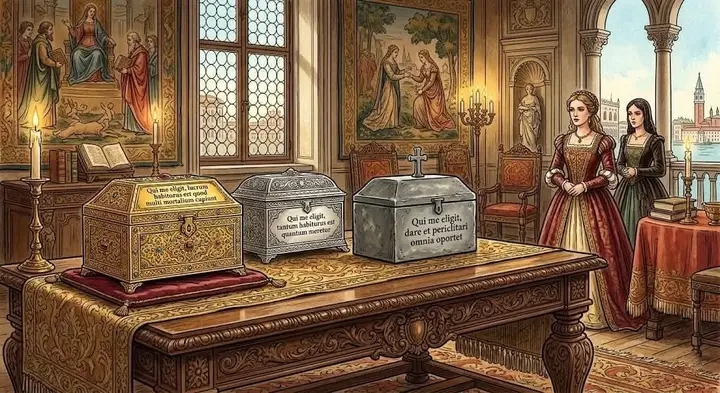
في المسرحية، ترك والد بورشيا الراحل اختبارًا فريدًا في وصيته لكل من يرغب في الزواج من ابنته. يجب على الخاطب أن يختار بين ثلاثة صناديق – واحد مصنوع من الذهب، وواحد من الفضة، وواحد من الرصاص.
صندوق واحد فقط يحتوي على صورة بورشيا؛ إذا اختار الخاطب بشكل صحيح، يفوز بها. إذا فشل، فعليه أن يُقسم ألا يتزوج غيرها.
كانت هناك نقوش على الصناديق الثلاثة مُضللة عمدًا:
الصندوق الذهب نقشت عليه العبارة: “من يختارني يكسب ما يرغب فيه كثير من البشر.”
والصندوق الفضة نقشت عليه العبارة: “من يختارني ينال على قدر ما يستحق.”
بينما نقشت على الصندوق الرصاص هذه العبارة: “من يختارني لا بُدَّ أن يَجُود ويُخاطر بكل ما يملك.”
~
الخاطب الأول أمير المغرب، المُتعجرف والذي يسهل التأثير عليه بالثروة الظاهرية، يرى أن امرأة عظيمة مثل بورشيا لا يُمكن أن تُرمز إلا بأجود المعادن. فيختار الصندوق الذهبي.
عندما فتح غطاء الصندوق، صُدم لعدم وجود الصورة. بدلاً من ذلك، “جمجمة” بداخلها – تجويف عينها الفارغ- لفافة مكتوبة فيا اقرأ اللفافة بصوت عالٍ في الغرفة، والتي تبدأ بالسطور الأسطورية الشهيرة:
“مَا كُلُّ ما يلمع ذهباً – كثيراً ما سَمِعْتَ هذا يُقَال. فكم من رَجُلٍ باع حياتَهُ لمجرد أن يتأمل مظهري الخارجي. إن القبور المُطَلَّاةَ بالذهب لا تحوي داخلها سوى الدُّود…”
تقدم القصة درساً كلاسيكياً عن الطبيعة البشرية: المظاهر خادعة للغاية، والتركيز فقط على البريق الخارجي والرغبة المادية غالباً ما يؤدي إلى الفراغ والخراب.
الخاطب التالي الذي يجرب حظه هو أمير أراغون، نبيل إسباني، واسمه كان تورية بارعة من شكسبير للدلالة على صفته المميزة: “الغرور.”
على عكس أمير المغرب، الذي أعماه بريق الذهب، يرى أراغون نفسه أرقى من أن يختار ما “يشتهيه كثير من الناس”، وينظر إلى عامة الناس بازدراء تام.
يوجه أراغون نظره إلى الصندوق الفضي، الذي يحمل نقشًا يقول:
من يختارني سينال ما يستحقه”.
يحسم غرور أراغون المفرط مصيره. فهو يفترض بفخر أنه بحكم نسبه الرفيع، وأصله النبيل، وتفوقه الفطري، يستحق بورشيا عن جدارة. يعلن: “سآخذ ما أستحقه” ويفتح الصندوق الفضي.
ماذا كان بداخله؟
بدلاً من صورة بورشيا الجميلة، يفتح أراغون الصندوق ليجد “صورة أحمق يرمش” – صورة منحوتة لرأس مهرج – يحمل لفافة.
وكما هو حال أمير المغرب، يجب على أراغون أن يقرأ حكمه بصوت عالٍ من اللفافة. تسخر الأبيات من غروره وكبريائه الفكري:
“لقد صَفَّتِ النار هذا المعدن سبع مرات؛ وسبع مرات تَمَّتْ تصفية الحُكم الصائِب الذي لا يُخْطِئُ الاخْتِيَار أبدًا. هناك من يَقْبَلُونَ الظِّلَال؛ فلا ينالون إلا سعادة واهية كالظل. وإني لأعلم أن هناك حمقى يعيشُون بيننا، مُمَوَّهُونَ بالفِضَّة (أي مخدوعون بمظاهرهم)، وكذلك كان هذا الصندوق تمامًا.”
بينما يحذر الصندوق الذهبي من الانخداع بالمظاهر الخارجية (الثروة الظاهرية)، يحذر الصندوق الفضي من خطر الغرور الداخلي (الأنا والوهم).
كان أراغون يعتقد أن قيمة الإنسان يمكن حسابها من خلال المكانة الاجتماعية والجدارة، متجاهلاً أن الحب الحقيقي والمصير يتطلبان التواضع والاستعداد للمخاطرة بكل شيء.
بعد رحيل أمير المغرب وأمير أراغون، حان الوقت أخيرًا للرجل الذي تُحبه بورشيا حقًا ليخوض الاختبار: باسانيو، الشاب النبيل من البندقية.
على عكس الأمراء الأثرياء المتغطرسين الذين سبقوه، يقترب باسانيو من الصناديق بتواضع حقيقي وتأمل فلسفي عميق. ينظر إلى النقوش ويدرك أن العالم ينخدع باستمرار بالزينة الخارجية – سواء أكانت وعودًا زائفة من القانون أو الدين أو الجمال.
يدير ظهره للذهب والفضة، ناظرًا بدلًا من ذلك إلى الصندوق الثالث المصنوع من الرصاص الثقيل الباهت، والذي يحمل أكثر النقوش إثارة للرهبة على الإطلاق:
“من يختارني لا بُدَّ أن يَجُود ويُخاطر بكل ما يملك.”
ينظر باسانيو إلى الصندوق الرصاصي ويُلاحظ أن بساطته تُؤثر فيه أكثر مما يُمكن أن تُؤثر فيه البلاغة. يختار الصندوق الرصاصي، مُعلنًا: «هنا أختار. فلتكن النتيجة فرحة!»
ماذا كان بداخله؟
عندما يفتح باسانيو الصندوق الرصاصي، يجد ما كان يأمله تمامًا: صورة بورشيا، مرسومة بجمالٍ فائقٍ حتى تكاد تنبض بالحياة، إلى جانب لفافة تُؤكد انتصاره.
يقرأ اللفافة الأخيرة بصوتٍ عالٍ، وقد غمرته الفرحة:
«يا من لم تَخْتَرْ بناءً على المظهر، لقد حالفك الحظ السعيد وكان اختيارك صائبًا وصادقًا! وبما أَنَّ هذا النصيب قد آلَ إِلَيْكَ، فَارْضَ به ولا تبحث عن جديد. إذا كنت راضيًا تمامًا بهذا، وترى فيه نعمتك وسعادتك، فَالْتَفِتْ حيث تقف سيدتك، واطلبها بِقُبْلَةِ حُبّ حانية.”
يُمثل الصندوق الرصاصي جوهر الحب الحقيقي والحكمة الروحية. في عالم شكسبير، لا يمكن شراء الالتزام الحقيقي بالذهب الزائف أو اكتسابه من خلال الفضة المتغطرسة. إنه يتطلب كل شيء.
باختياره المعدن الأقل قيمة في الخارج، يفوز باسانيو بالكنز الأثمن في الداخل.
جينيحسينعلي
A selection from world literature: William Shakespeare’s seminal work, The Merchant of Venice. May it provide an insightful read.
By: #jenny_hussien_ali
The Merchant of Venice, 1596 and 1599. (Act II, Scene VII).
First Command
~
In the play, Portia’s late father has left a unique test in his will for anyone wishing to marry his daughter. A suitor must choose between three caskets (boxes)—one made of gold, one of silver, and one of lead.
Only one casket contains Portia’s portrait; if a suitor chooses correctly, he wins her hand. If he fails, he must swear never to marry anyone else.
There are inscriptions on the boxes, are intentionally deceptive:
The gold box was inscribed with the words: “Who chooseth me shall gain what many men desire.”
The silver box was inscribed with the words: “Who chooseth me shall get as much as he deserves.”
While the lead box was inscribed with these words: “Who chooseth me must give and hazard all he hath.”
~
The fiest suitor, The Prince of Morocco, arrogant and easily swayed by superficial wealth, reasons that a woman as magnificent as Portia could only be symbolized by the finest metal. He chooses the gold casket.
When he unlocks it, he is shocked to find no portrait. Instead, he finds a “carrion Death” (a skull) with a written scroll inside its empty eye socket. He reads the scroll aloud to the room, which begins with the legendary lines:
“All that glisters is not gold— Often have you heard that told. Many a man his life hath sold But my outside to behold. Gilded tombs do worms enfold…”
The story teaches a classic lesson about human nature: appearances are highly deceptive, and focusing purely on outward brilliance and material desire often leads to emptiness and ruin.
The next suitor to try his luck is the Prince of Arragon, a Spanish nobleman whose name is a clever play on words by Shakespeare to signal his defining trait: arrogance.
Unlike the Prince of Morocco, who was blinded by the flashiness of gold, Arragon considers himself far too refined to choose what “many men desire,” viewing the common masses with utter contempt.
He turns his attention to the silver casket, which bears the inscription:
“Who chooseth me shall get as much as he deserves.”
Arragon’s supreme self-importance seals his fate. He proudly assumes that by virtue of his high birth, noble breeding, and inherent superiority, he rightfully deserves Portia. He declares, “I will assume desert” (I will take what I deserve) and unlocks the silver box.
What Was Inside?
Instead of Portia’s beautiful portrait, Arragon opens the casket to find “the portrait of a blinking idiot”—a carved image of a fool’s head (a jester)—holding a scroll.
Just like the Prince of Morocco, Arragon must read his judgment aloud from the scroll. The verse mocks his vanity and intellectual pride:
“The fire seven times tried this; Seven times tried that judgment is That did never choose amiss. Some there be that shadows kiss; Such have but a shadow’s bliss. There be fools alive, I wis [know], Silvered o’er; and so was this.”
While the gold casket warns against being deceived by external appearance (superficial wealth), the silver casket warns against the danger of internal presumption (ego and self-delusion).
Arragon believed that human worth could be calculated by societal status and merit, failing to realize that true love and destiny require humility and a willingness to risk everything
***.
With both the Prince of Morocco and the Prince of Arragon gone, it is finally time for the man Portia truly loves to take the test: Bassanio, a young Venetian gentleman.
Unlike the wealthy, arrogant princes who came before him, Bassanio approaches the caskets with genuine humility and deep philosophical reflection. He looks at the inscriptions and realizes that the world is constantly deceived by outward ornament—whether it is the false promise of law, religion, or beauty.
He turns his back on the gold and silver, looking instead at the third box made of dull, heavy lead, which bears the most intimidating inscription of all:
“Who chooseth me must give and hazard all he hath.”
Bassanio looks at it and remarks that its plainness moves him more than eloquence ever could. He chooses the lead casket, declaring: “Here choose I. Joy be the consequence!”
What Was Inside?
When Bassanio unlocks the lead box, he finds exactly what he hoped for: the portrait of Portia, painted so beautifully that it looks almost alive, alongside a scroll confirming his victory.
Overjoyed, he reads the final scroll aloud:
“You that choose not by the view, Chance as fair and choose as true! Since this fortune falls to you, Be content and seek no new. If you be well pleased with this And hold your fortune for your bliss, Turn you where your lady is And claim her with a loving kiss.”
The lead casket represents the true nature of love and spiritual wisdom. In Shakespeare’s world, genuine commitment cannot be bought with superficial gold or earned through self-righteous silver. It demands everything.
By choosing the least valuable metal on the outside, Bassanio wins the ultimate treasure on the inside.
Editing by: #jenny_hussien_ali
#رحيل#مجلة ايايت فوتو ارت