المعنى الكامن وراء الأحجار
~
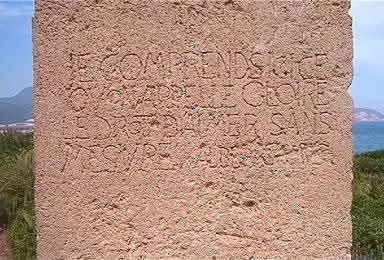
النصب التذكاري الذي أقيم بين أطلال تيبازة تكريماً لألبير كامو. يتميز بنقش جميل محفور مباشرة في الحجر. إنه اقتباس عميق مأخوذ من مقال سابق كتبه عن الموقع عام 1938 بعنوان Noces à Tipasa. “حفلات الزفاف في تيبازة”. النص الأصلي بالفرنسية:
“Je comprends ici ce qu’on appelle gloire : le droit d’aimer sans mesure.”
— Albert Camus
“أَفْهَمُ هُنَا مَا يُسَمَّى بِالـمَجْدِ: الحَقُّ فِي الحُبِّ بِلَا حُدُودٍ.” – البير كامو
اعتقد كامو أن المجد الحقيقي للإنسان لا يكمن في السلطة السياسية، أو الانتصارات التاريخية، أو الثروة. بل، وهو يقف أمام البحر الشاسع، والشمس الدافئة، وآثار تيبازة الخالدة، شعر أن أسمى أنواع المجد المتاحة للإنسان هو الحرية البسيطة الجامحة في حب الوجود بشغف لا حدود له، بلا قيود..
إنها لمأساة مفجعة حقًا. لم يتجاوز عمره 46 عامًا حين لقي حتفه في حادث سير في يناير 1960.
وما يزيد الأمر عمقًا وإثارةً للسخرية، نظرًا لفلسفته العبثية، هو فوزه بجائزة نوبل في الأدب قبل بضع سنوات فقط، عام 1957. كان في أوج عطائه الإبداعي، وما زال أمامه الكثير ليقدمه للعالم من مقالات وروايات وأفكار.
ثمة تفصيل شهير ومؤثر حول وفاته، فقد عُثر في جيبه، في موقع الحادث، على المخطوطة غير المكتملة لروايته الأكثر ذاتية، “الإنسان الأول” (Le Premier Homme)، التي أهداها إلى والدته واستلهم منها الكثير من طفولته في الجزائر.
مع أن حياة ألبير كامو انتهت مبكرًا، إلا أن “الصيف الذي لا يُقهر” الذي تركه في كتاباته يضمن أن صوته لم يشيخ أبدًا. رحل شابًا، ولكن كآثار تيبازة نفسها، تبقى كلماته خالدة.
إعداد وترجمة: #جينيحسينعلي
The Meaning behind the Stones
~
The monument erected among the ruins of Tipasa in honor of Albert Camus features a beautiful inscription carved directly into the stone.It is a profound quote taken from an earlier essay he wrote about the site in 1938, titled “Nuptials at Tipasa” (Noces à Tipasa.) : The Original French Text
“Je comprends ici ce qu’on appelle gloire : le droit d’aimer sans mesure.”
— Albert Camus
“I understand here what is called glory: the right to love without measure.”
— Albert Camus
Camus believed that true human “glory” wasn’t found in political power, historic triumphs, or wealth. Instead, standing before the vast sea, the warm sun, and the timeless ruins of Tipasa, he felt that the highest form of glory available to a human being is the simple, untamed freedom to love existence passionately and boundlessly—without measure.
It is incredibly moving that this exact quote marks his memorial, facing out toward the very Mediterranean waters he loved so much.
It really is heartbreakingly tragic. He was only 46 years old when he died in a car accident in January 1960.
What makes it feel even more profound—and deeply ironic, given his philosophy of the absurd—is that he had just won the Nobel Prize in Literature a few years prior in 1957. He was at the absolute peak of his creative powers, with so many more essays, novels, and ideas left to give the world.
There is a famous, haunting detail about his death: in his pocket at the crash site, they found the unfinished manuscript of his most autobiographical novel, The First Man (Le Premier Homme), which was dedicated to his mother and heavily drew upon his childhood in Algeria.
Even though his life was cut short, the “invincible summer” he left behind in his writing ensures that his voice never truly aged.
He died young, but like the ruins of Tipasa themselves, his words remain entirely timeless.
Editing by: #jenny_hussien_ali
النقش المنحوت على نصب كامو التذكاري في تيبازة. المصدر: ويكيميديا كومنز
- Wikimedia.org / File:Stèle d’Albert Camus à Tipaza.jpg – Wikimedia Commons
#رحيل#مجلة ايليت فوتو ارت..