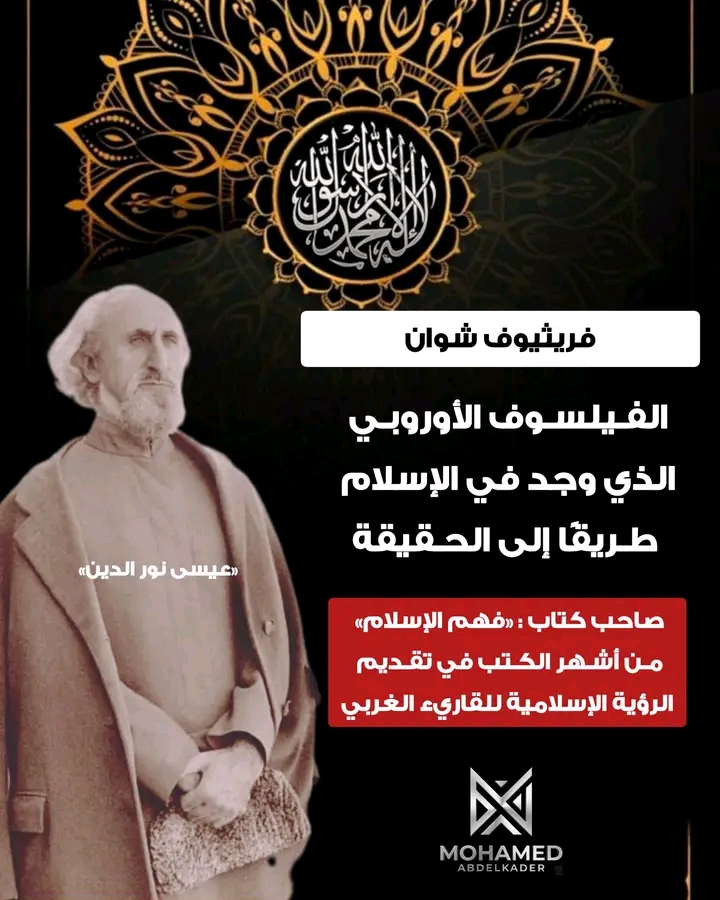
🔴 لم يكن فريثيوف شوان رجلًا عاديًا في مسار البحث الديني والفلسفي في أوروبا القرن العشرين، فقد بدأ حياته في أسرة كاثوليكية ذات جذور ألمانية، ثم انشغل منذ طفولته بأسئلة الدين والحقيقة والجمال، وقرأ مبكرًا في دينه والهندوسية والإسلام والفلسفة اليونانية، قبل أن يقوده بحث طويل إلى الإسلام ، ليُعرف بعد ذلك باسم عيسى نور الدين.
🔴 لكن قصة شوان ليست قصة رجل ترك دينًا واعتنق دينًا آخر في لحظة عابرة.. إنها قصة عقل أوروبي قضى حياته يبحث عن الحقيقة التي رأى أنها تتجاوز حدود العصر الحديث.
🔴 وُلد فريثيوف شوان في 18 يونيو 1907 بمدينة بازل السويسرية، لأب ألماني الأصل كان عازف كمان وموسيقيًا، وأم من أصول ألزاسية ناطقة بالفرنسية.
نشأ في بيت كانت الموسيقى والثقافة والاهتمام بالروحانيات حاضرة فيه، وكان صديقه الأقرب في طفولته تيتوس بوركهارت، الذي أصبح لاحقًا أحد أبرز المفكرين في المدرسة التقليدية نفسها.
لكن شوان لم ينتظر حتى مرحلة النضج ليبدأ أسئلته الكبرى، منذ سنواته الأولى، بدأ يقرأ في الكتاب المقدس، ثم تعرف إلى نصوص هندوسية مثل الأوبانيشاد والبهاجافاد غيتا، وقرأ القرآن وأعمال أفلاطون وغوته وإيمرسون وغيرهم.
🔴 في عام 1920 توفي والده، وكان شوان في الثالثة عشرة من عمره.. اضطرت والدته إلى الانتقال به وبأخيه إلى مدينة مولوز في فرنسا، وهناك دخلت حياته مرحلة جديدة.. ترك الدراسة في سن مبكرة، وعمل في تصميم الأقمشة، قبل أن ينتقل لاحقًا إلى باريس.
لكن ترك الدراسة لم يكن يعني توقف رحلته الفكرية، على العكس، بدأ يقرأ بصورة أكثر كثافة.
🔴 وفي سن السادسة عشرة تقريبًا، وقع بين يديه كتاب «الشرق والغرب» للفيلسوف الفرنسي رينيه غينون.. كانت تلك القراءة نقطة تحول حاسمة.
كان رينيه غينون قد أصبح في ذلك الوقت أحد أبرز المنتقدين للحضارة الغربية الحديثة، ودافع عن ضرورة العودة إلى التقاليد الروحية الكبرى.
وجد شوان في أفكار غينون إجابات عن أسئلة كانت تؤرقه منذ طفولته.. لم يكن مقتنعًا بأن الحداثة الغربية، بما حملته من مادية وعقلانية منفصلة عن الروح، يمكن أن تكون نهاية التاريخ أو أعلى مراحل تطور الإنسان.
وبدأ يرى أن وراء الأديان المختلفة حقيقة روحية عميقة، وأن الوصول إليها لا يكون بمجرد التفكير المجرد، وإنما من خلال دين حي وممارسة روحية حقيقية.
🔴 وفي عام 1931 بدأ مراسلاته مع غينون، وأصبح تأثيره الفكري عليه بالغًا.. هنا بدأت المفارقة الكبرى في قصة شوان.
فقد كان يبحث عن الحقيقة في تقاليد متعددة، لكنه لم يكن يرى أن المقارنة بين الأديان تكفي وحدها.
كان يحتاج إلى طريق روحي يعيش داخله، وكان الإسلام، بالنسبة إليه، يجمع بين العقيدة الواضحة، والعبادة، والشريعة، والنظر إلى الله باعتباره الحقيقة المطلقة.
وفي الوقت نفسه، كان قد بدأ يتعلم العربية في باريس، وازداد اهتمامه بالتراث الإسلامي وبأعمال كبار المتصوفة والفلاسفة المسلمين.
ثم جاء القرار.
🔴 في نهاية عام 1932، سافر شوان إلى الجزائر.. ذهب إلى مدينة مستغانم، حيث التقى بالشيخ أحمد العلوي، أحد أبرز الشيوخ في شمال أفريقيا في ذلك العصر.
وفي زاوية الشيخ العلوي دخل شوان الإسلام، واتخذ اسم عيسى نور الدين.. لم يكن الأمر بالنسبة إليه مجرد تحول فكري.
وهكذا انتقل الشاب الأوروبي الذي قضى سنوات يبحث عن الحقيقة بين الكتب إلى ممارسة الإسلام بصورة مباشرة.
🔴 بعد عودته إلى أوروبا، لم يتحول شوان إلى داعية بالمعنى التقليدي.. كان مشروعه مختلفًا.
أراد أن يشرح للعالم الغربي ما اعتبره البعد الداخلي والروحي للدين.
كتب بالفرنسية، وخاطب المثقفين والفلاسفة والباحثين عن المعنى، وكان يرى أن الإنسان الحديث لا يعاني فقط من أزمة سياسية أو اقتصادية، وإنما من أزمة أعمق: انفصال الإنسان عن المقدس.
ولهذا أصبح من أبرز ممثلي ما عُرف لاحقًا باسم المدرسة التقليدية أو الفلسفة الخالدة، إلى جانب رينيه غينون وأناندا كوماراسوامي وتيتوس بوركهارت.
🔴 من أكثر الجوانب إثارة للاهتمام في فكر شوان أنه لم يتعامل مع الأديان المختلفة باعتبارها مجرد موضوع أكاديمي.. كان يرى أن وراء الأشكال الدينية المختلفة حقيقة إلهية واحدة، مع اختلاف الطرق والتشريعات والصور التي تظهر من خلالها هذه الحقيقة.
وفي الوقت نفسه، شدد على ضرورة أن يعيش الإنسان داخل دين محدد، لا أن يكتفي بفكرة عامة عن الروحانيات.
وهذه النقطة كانت أساسية في مشروعه الفكري، لكنها أيضًا جعلت أفكاره موضع نقاش وجدل واسع، حتى بين الباحثين في الفكر الإسلامي.
فهو لم يكن مجرد «مستشرق» يدرس الإسلام من الخارج، بل كان مفكرًا مسلمًا ينظر إلى الأديان والفلسفات من داخل رؤية روحية وفلسفية خاصة.
🔴 ترك شوان أكثر من عشرين كتابًا بالفرنسية، تناول فيها الميتافيزيقا، والدين، والتصوف، والفن، والروحانية، وأزمة الإنسان الحديث.
ومن أشهر كتبه:
«فهم الإسلام» (Understanding Islam)، الذي صدر بالفرنسية عام 1961، ثم تُرجم إلى الإنجليزية، وأصبح من أشهر كتبه في تقديم الرؤية الإسلامية للقارئ الغربي.
كما كتب The Transcendent Unity of Religions، وLogic and Transcendence، وEsoterism as Principle and as Way، وغيرها من الأعمال التي جعلته أحد أكثر ممثلي الفكر التقليدي حضورًا في القرن العشرين.
🔴 قضى شوان جزءًا كبيرًا من حياته بين فرنسا وسويسرا، قبل أن ينتقل في عام 1980 إلى الولايات المتحدة مع زوجته.
استقر في بلومينغتون بولاية إنديانا، حيث كانت له جماعة من المهتمين بأفكاره.. هناك واصل الكتابة والتدريس الروحي ومراسلة أتباعه والباحثين المهتمين بفكره.
وفي سنواته الأخيرة ازداد إنتاجه الشعري، وكتب آلاف القصائد، إلى جانب استمرار مشروعه الفكري.
كما حافظ على اهتمامه بالتقاليد الروحية لدى السكان الأصليين في أمريكا الشمالية، وأقام علاقات وثيقة مع عدد من زعمائهم، حتى جرى تبنيه رمزيًا في قبيلتي لاكوتا سيو وكرو.
🔴 في 5 مايو 1998، توفي فريثيوف شوان في بلومينغتون بولاية إنديانا، عن عمر ناهز 90 عامًا.
🔴 Fithjof Schuon was no ordinary figure in the history of religious and philosophical inquiry in 20th-century Europe. He was born into a Catholic family of German roots, and from childhood he was preoccupied with questions of religion, truth, and beauty. He read early in his life about his own faith, Hinduism, Islam, and Greek philosophy, before a long intellectual search eventually led him to Islam, where he became known as Isa Nur al-Din.
🔴 But Schuon’s story is not that of a man who simply abandoned one religion and embraced another in a fleeting moment. It is the story of a European mind that spent his life searching for a truth he believed transcended the boundaries of the modern age.
🔴 Frithjof Schuon was born on June 18, 1907, in Basel, Switzerland, to a German-born father who was a violinist and musician, and a mother of Alsatian origin who spoke French.
He grew up in a home where music, culture, and an interest in spirituality were present. His closest childhood friend was Titus Burckhardt, who would later become one of the prominent thinkers of the same traditionalist school.
But Schuon did not wait until adulthood to begin asking his major questions. From an early age, he began reading the Bible, then became acquainted with Hindu texts such as the Upanishads and the Bhagavad Gita. He also read the Quran and the works of Plato, Goethe, Emerson, and others.
🔴 In 1920, his father died when Schuon was thirteen. His mother was forced to move with him and his brother to the French city of Mulhouse, where a new stage of his life began. He left school at an early age and worked in textile design before later moving to Paris.
But leaving school did not mean the end of his intellectual journey. On the contrary, he began reading even more intensely.
🔴 At around the age of sixteen, a copy of East and West by the French philosopher René Guénon came into his hands. That reading marked a decisive turning point.
At the time, René Guénon had become one of the most prominent critics of modern Western civilization and advocated a return to the great spiritual traditions.
Schuon found in Guénon’s ideas answers to questions that had troubled him since childhood. He was not convinced that Western modernity, with its materialism and rationalism detached from the spirit, could represent the culmination of history or the highest stage of human development.
He began to see that behind the different religions lay a profound spiritual truth, and that reaching it could not be achieved through abstract thought alone, but through a living religion and genuine spiritual practice.
🔴 In 1931, he began corresponding with Guénon, whose intellectual influence on him became profound. Here began the great turning point in Schuon’s story.
He had been searching for truth across different traditions, but he did not believe that comparing religions was enough in itself.
He needed a spiritual path that he could actually live within. For him, Islam combined clear belief, worship, law, and the understanding of God as the Absolute Truth.
At the same time, he had begun learning Arabic in Paris and became increasingly interested in Islamic heritage and the works of major Muslim mystics and philosophers.
Then came the decision.
🔴 At the end of 1932, Schuon traveled to Algeria. He went to the city of Mostaganem, where he met Sheikh Ahmad al-Alawi, one of the most prominent spiritual leaders in North Africa at the time.
At the Sheikh al-Alawi’s zawiya, Schuon embraced Islam and took the name Isa Nur al-Din. For him, this was not merely an intellectual transformation.
Thus, the young European who had spent years searching for truth among books moved toward practicing Islam directly.
🔴 After returning to Europe, Schuon did not become a preacher in the conventional sense. His project was different.
He wanted to explain to the Western world what he regarded as the inner and spiritual dimension of religion.
He wrote in French and addressed intellectuals, philosophers, and those searching for meaning. He believed that modern humanity was suffering not only from political or economic crises, but from a deeper crisis: humanity’s separation from the sacred.
For this reason, he became one of the leading representatives of what later became known as the Traditionalist School or the philosophy of perennialism, alongside René Guénon, Ananda Coomaraswamy, and Titus Burckhardt.
🔴 One of the most interesting aspects of Schuon’s thought is that he did not approach different religions merely as an academic subject. He believed that behind the various religious forms lay a single divine reality, expressed through different paths, laws, and forms.
At the same time, he emphasized the necessity of living within a specific religion rather than being satisfied with a general idea of spirituality.
This point was central to his intellectual project, but it also made his ideas the subject of considerable debate and controversy, even among scholars of Islamic thought.
He was not merely an “Orientalist” studying Islam from the outside. Rather, he was a Muslim thinker who viewed religions and philosophies from within a distinctive spiritual and philosophical perspective.
🔴 Schuon left behind more than twenty books in French, addressing metaphysics, religion, Sufism, art, spirituality, and the crisis of modern humanity.
Among his best-known works is:
Understanding Islam, which was originally published in French in 1961 and later translated into English, becoming one of his best-known works for presenting the Islamic worldview to Western readers.
He also wrote The Transcendent Unity of Religions, Logic and Transcendence, and Esoterism as Principle and as Way, among other works that established him as one of the most prominent representatives of traditionalist thought in the 20th century.
🔴 Schuon spent much of his life between France and Switzerland before moving to the United States with his wife in 1980.
He settled in Bloomington, Indiana, where he had a community of people interested in his ideas. There, he continued writing, teaching spirituality, and corresponding with followers and researchers interested in his thought.
During his later years, his poetic output increased, and he wrote thousands of poems while continuing his intellectual work.
He also maintained an interest in the spiritual traditions of Native Americans and developed close relationships with several of their leaders, eventually being symbolically adopted by the Lakota Sioux and Crow tribes.
🔴 On May 5, 1998, Frithjof Schuon died in Bloomington, Indiana, at the age of 90.
#محمد عيد القادر#مجلة ايليت فوتو ارت.