رعب العزلة: تشريح كيركغارد لظاهرة “الحشد”
بقلم: جيني حسين علي
~~
أشار الفيلسوف الدنماركي سورين كيركغارد ذات مرة قائلاً:
“إن معظم الناس لا يخشون الوقوع في الخطأ بقدر ما يخشون البقاء وحيدين”.
— سورين كيركغارد، يوميات وأوراق
لم ينشر كيركغارد هذا النقد العميق في حياته قط؛ بل دوّنه في طيات يومياته الشخصية الخاصة، وهو مشروع ضخم استهله عام 1833 حين كان في العشرين من عمره، وواظب عليه بدقة متناهية حتى وفاته عام 1855. ومع ذلك، كان يدرك تماماً أن هذه الصفحات الخاصة ستجد طريقها يوماً ما إلى العلن؛ إذ تنبأ -في مقولة شهيرة- بأن الناس سيعكفون بعد وفاته على فك رموز أوراقه بجهدٍ وتأنٍ بحثاً عن جوهره الحقيقي. وكما أشار الباحث “دي. أنتوني ستورم” ببراعة، فقد كانت هذه اليوميات بمثابة مختبرٍ فذٍّ وحرٍّ تبلورت فيه أكثر رؤى كيركغور النفسية عمقاً ونفاذاً.
لفهم ثقل هذه الملاحظة، لا بد من النظر إلى السياق التاريخي المحوري الذي شهدته أواخر أربعينيات وأوائل خمسينيات القرن التاسع عشر. ففي تلك الفترة، تملّك كيركغارد شعورٌ عميق بخيبة الأمل تجاه المجتمع الدنماركي وكنيسة الدولة، إذ رأى تدهوراً بنيوياً في قدرة الإنسان على عيش حياة أصيلة تتسم بطابع فردي وشغف حقيقي. وبدلاً من بناء علاقة صارمة وشخصية للغاية مع الحقيقة أو الإيمان، كان الأفراد يلجؤون عادةً إلى الاحتماء بالرأي العام، والاتجاهات الثقافية السائدة، والراحة المغرية التي يوفرها الانصهار في الجماعة. وحين يكتب كيركغارد أن الناس يخشون العزلة أكثر من خشيتهم للخطأ، فإنه يشخّص حالة من الجبن الفكري والأخلاقي العميق: تلك الرغبة الجامحة في نيل الأمان الذي توفره “القطيعية”، وذلك الرعب المُشلّ من العزلة.
وعند تتبع الجذور الفكرية للفلسفة الوجودية، يتضح أن بعضاً من أعمق رؤاها وأكثرها رسوخاً لم تكن مُعدّة في الأصل للاستهلاك العام الفوري. ويمكن هنا عقد مقارنة معاصرة لافتة مع ألبير كامو، إذ تكشف دفاتر ملاحظاته الخاصة عن عالم داخلي يماثل عالم كيركغارد إلى حد مدهش. وتُظهر هذه السجلات الشخصية -التي نُشرت بعد وفاته- كيف أن التأملات الفردية المنعزلة، التي تبلورت في الخلوة على مدى عقود، تتجاوز في نهاية المطاف حيزها الخاص لتعيد تشكيل فهمنا الثقافي والإنساني المشترك بشكل جذري.
جينيحسينعلي
The Terror of Solitude: Kierkegaard’s Anatomy of the Crowd
By Jenny Hussien Ali
~~
The Danish philosopher Søren Kierkegaard once observed:
“Most men are not so much afraid of being in the wrong as they are of being alone.”
— Søren Kierkegaard, Journals and Papers
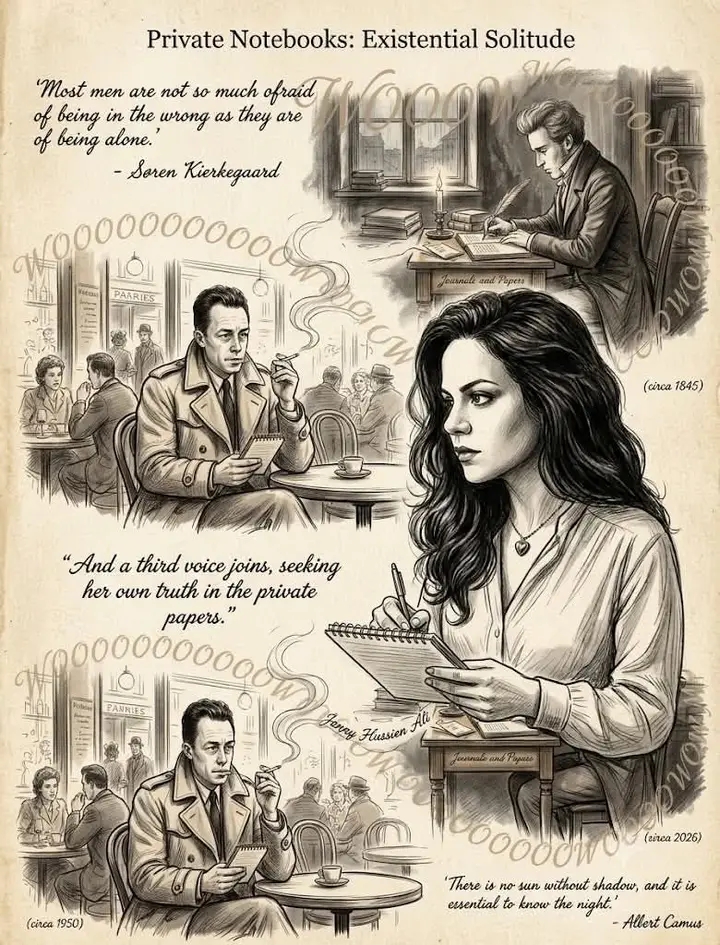
Kierkegaard never published this profound indictment during his lifetime; rather, he recorded it within the private confines of his personal journals, a monumental enterprise he commenced in 1833 at the age of twenty and maintained meticulously until his death in 1855. Yet, he was acutely aware that these private pages would eventually find a public destiny. He famously prophesied that after his death, people would painstakingly decipher his papers to search for his true essence. As the scholar D. Anthony Storm aptly noted, these journals functioned as an unfettered, brilliant laboratory wherein Kierkegaard’s most piercing psychological insights were crystallized.
To understand the weight of this observation, one must look to the historical crucible of the late 1840s and early 1850s. During this period, Kierkegaard grew deeply disillusioned with Danish society and the state church, perceiving a systemic decay in humanity’s capacity to lead authentic, passionately individual lives. Instead of forging a rigorous, intensely personal relationship with truth or faith, individuals routinely sought refuge behind public opinion, prevailing cultural trends, and the seductive comfort of the collective. When Kierkegaard writes that men fear solitude more than error, he is diagnosing a profound intellectual and moral cowardice: the desperate craving for the safety of the herd and the paralyzing dread of isolation.
When tracing the intellectual lineage of existential philosophy, it becomes clear that some of its most enduring insights were never originally intended for immediate public consumption. A striking modern parallel can be drawn with Albert Camus, whose private notebooks reveal a remarkably similar interior landscape. These intimate, posthumously published records demonstrate how solitary, individual reflections—cultivated in isolation over decades—ultimately transcend the private sphere to fundamentally reshape our shared cultural and human understanding.
— #jenny_hussien_ali#مجلة ايليت فوتو ارت..